










[Article]: Integrating the Right Automation: Vertical Carousels, VLMs and Which Industries Need Them
utomated material handling has transformed B2B facilities by helping operations manage growing inventories without expanding footprints. For example, vertical storage systems use available building height to increase density, turning overhead space into organized inventory zones.
Meanwhile, vertical lift modules (VLMs) support faster retrieval and stronger inventory visibility. Industries from automotive manufacturing to healthcare have adopted these systems to address space constraints, inefficient picking, and complex inventory management challenges.
What Are Vertical Lift Modules?
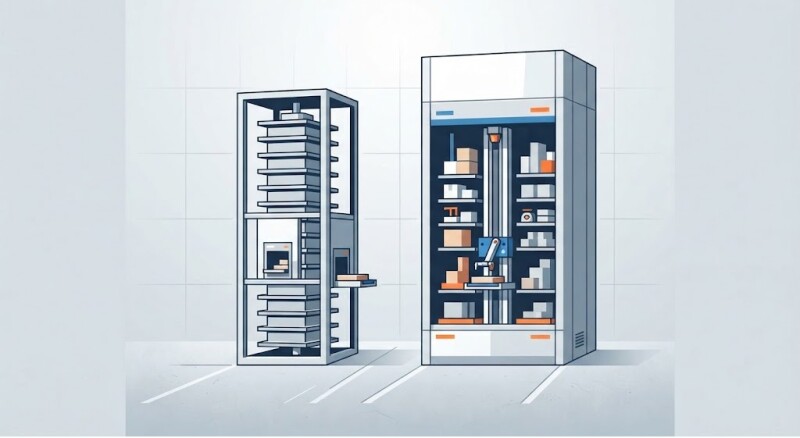
Vertical lift modules condense inventory into a vertical footprint, maximizing storage capacity while minimizing floor space. These automated storage and retrieval systems (ASRS) retrieve the requested tray and deliver it directly to an accessible area for workers.
Rather than walking through aisles or climbing ladders, employees receive inventory at a comfortable working height. Manufacturers can also store thousands of SKUs in a VLM, and utilizing dividers can expand capacity further.
Vertical carousels differ from VLMs in their mechanical operation. Carousels use rotating carriers that bring bins to the operator in a continuous loop. VLMs retrieve individual trays independently using an internal extractor, allowing for more flexible storage configurations.
Organizations can integrate VLMs with warehouse management systems, enterprise resource planning platforms, and inventory software. When evaluating specific models, item dimensions, weight, retrieval frequency, and ceiling height influence system selection.
What Industries Use VLMs?
While the technology offers universal benefits, certain sectors have rapidly adopted vertical lift modules due to strict regulations, massive parts inventories, or heavy compliance needs.
Automotive and Manufacturing
When automotive and manufacturing operations manage heavy, bulky items alongside small components, automation becomes essential. Inefficient manual picking processes can disrupt production schedules on the assembly line. Centralizing automated storage helps organizations reduce the time employees spend walking between production areas and traditional shelving.
Lean manufacturing methods prevent costly facility expansions while limiting cycle times, thanks to shorter travel distances. Beyond speed, expensive tools and components stay more secure through controlled access, which ensures accountability across shifts. When operations directors understand what industries use VLMs, they can evaluate whether their sector could benefit from similar automation investments.
Healthcare and Pharmaceuticals
Healthcare operations apply VLMs to medical supplies, pharmaceutical inventory, and other high-value products requiring organized storage. Software-supported tracking and controlled access strengthen inventory visibility and accountability, ensuring these sensitive and valuable items remain available when patients need them.
Limited facility space gets used more efficiently through enclosed storage, a crucial advantage in hospitals and clinics where every square foot carries premium value. Configuring vertical lift modules around applicable storage, security, and regulatory requirements remains essential. Creating detailed audit trails that track which items were accessed, when and by whom enables automated technology to support compliance efforts.
Warehousing and Logistics
Massive, diverse inventories challenge traditional storage methods in the logistics industry. E-commerce and distribution centers rely on automation to keep pace with high consumer demand and rapid fulfillment cycles. Workers no longer need to navigate sprawling warehouse floors when goods-to-person retrieval brings inventory directly to them.
Automated cranes speed up picking and storage times by up to 50% compared to manual processes, significantly increasing throughput. Rather than operating as isolated equipment, VLMs can complement conveyors, management software, and other automation. The technology is especially useful for operations with high SKU counts and limited floor space.
Overcoming Common Facility Challenges
Automated vertical storage addresses pressing operational bottlenecks that facilities face today. Quality solutions focus on comprehensive improvements across space utilization, efficiency, accuracy, inventory control, and workplace safety.
Maximizing Floor Space and Capacity
Consolidating inventory vertically through VLMs reduces the footprint dedicated to conventional shelving or racking. Vidir Solutions, a leading material handling company, notes that implementing vertical storage can reclaim up to 85% of a facility's footprint without increasing building size.
As a provider of automated vertical storage systems, Vidir emphasizes that organizations can redirect capital toward equipment upgrades or workforce development rather than construction projects.
The most reliable providers recognize that maximizing floor space extends beyond simple vertical consolidation. Quality solutions integrate features that improve picking accuracy through directed retrieval systems and strengthen inventory control through automated tracking. When space reclamation pairs with these operational improvements, organizations gain compounding benefits that affect productivity and accuracy across their entire facility.
Improving Efficiency and Pick Accuracy
Walking and manual retrieval during picking operations all decrease when goods-to-person automation takes over. Once the system delivers the needed tray, pick-to-light technology and software-directed retrieval guide employees toward the correct items.
According to Vidir Solutions, light-directed picking and barcode scanning can eliminate picking errors by over 90% by bringing inventory directly to the operator. The result is shorter fulfillment cycles and fewer costly order errors.
In automotive and manufacturing environments where components must reach production quickly, these speed and accuracy improvements become critical for preventing line stoppages. By presenting the exact tray and illuminating the precise bin location, vertical lift modules ensure operators can locate and deliver the right component within seconds rather than minutes.
Enhancing Inventory Control
Lost or damaged stock becomes more likely when organizations manage large inventories manually. Automated technology prevents misplaced inventory that leads to unnecessary reordering by tracking every item. When integrated with a warehouse management system (WMS) or enterprise resource planning (ERP) platforms, these solutions provide a consistent view of inventory across operations.
The financial impact of poor inventory control extends beyond storage costs. Vidir Solutions reports that facilities estimate a cost of between $25 and $100 for each mispick, expenses that multiply rapidly across hundreds or thousands of line items per day. Because typical holding costs often make up 20% to 30% of total inventory value, stronger visibility becomes financially critical. Better tracking reduces unnecessary replenishment and manual search time.
Frequently Asked Questions
The following questions address common considerations regarding automated storage technology and implementation.
What is the difference between a vertical carousel and a VLM?
The primary distinction lies in how each technology delivers inventory to operators. Carousels operate on a rotating principle, bringing entire sections of bins through a continuous loop. VLMs take a more targeted approach, using an internal extractor to retrieve only the specific tray requested.
This difference affects storage flexibility, with VLMs accommodating more varied inventory dimensions.
When does a facility need a VLM?
Several indicators suggest automated storage could address operational inefficiencies. Overcrowded shelving, growing SKU counts, excessive picker travel, and limited room for growth all point toward potential benefits. When inventory errors recur or high-value stock becomes difficult to control, these challenges signal an opportunity.
Can VLMs integrate with existing warehouse software?
Many modern automated storage solutions support integration with WMS, ERP and inventory management platforms. Organizations should evaluate compatibility during planning rather than after installation to ensure seamless data flow.
Modernizing Facility Operations
Rather than simply purchasing new equipment, effective automation starts with identifying the specific operational problem. Space constraints, inefficient picking, limited inventory visibility, and ergonomic concerns can all be addressed by vertical lift modules. Because vertical carousels and VLMs serve different operational needs, careful application assessment becomes essential.
When organizations choose automation based on inventory characteristics, workflows, and long-term growth, they create efficient operations. Those who evaluate their specific challenges and match them to appropriate technology achieve better returns on automation investments.























Interested? Submit your enquiry using the form below:
Only available for registered users. Sign In to your account or register here.